Leave Your Message

2026 Top Quartz Material Types for Global Buyers

Global buyers face a crowded market of natural quartzite, engineered quartz surfaces, and silica-based products. Their names can sound similar. Their performance and composition are not interchangeable. Quartz Material selection affects appearance, maintenance, fabrication, and project cost.

Market data shows why careful comparison matters. Grand View Research estimated the global quartz countertops market at about USD 11.16 billion in 2023, with projected growth through 2030. That estimate describes one product segment, not every quartz material category. The U.S. Geological Survey’s Mineral Commodity Summaries also tracks industrial sand and gravel, a key silica feedstock. Together, these sources offer useful context, but neither replaces product-level specifications. Check composition, technical data sheets, test methods, and supplier claims. Look closely at samples under the lighting used in the finished space. Small details matter.

This guide compares material types by composition, likely applications, durability, maintenance, and sourcing considerations. It also notes where terminology can mislead buyers. A polished sample tells only part of the story. Expert quotations require a verifiable original source; none was provided here, so no statement is attributed to a named specialist. That restraint matters. Buyers should verify claims before committing to a specification, especially when products share similar labels but differ in formulation and care requirements.
2026 Top Quartz Material Types for Global Buyers

Quartz Materials: Composition, Forms, and Classification

Quartz Materials: Composition, Forms, and Classification

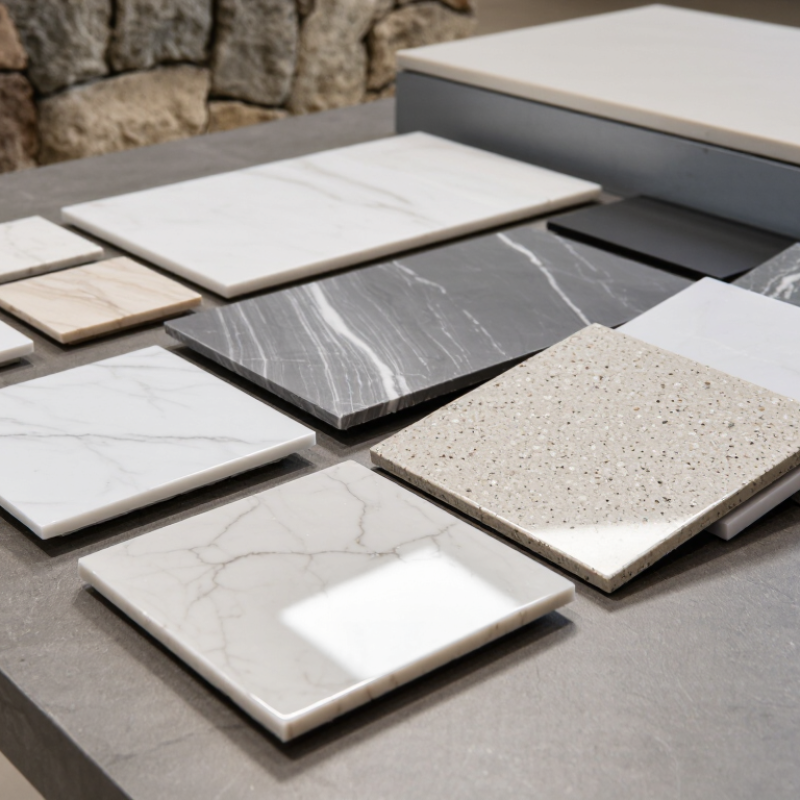
Quartz is crystalline silica, with the chemical formula SiO2. Commercial materials differ by purity, grain size, and processing. Natural quartz occurs as crystals, veins, and quartz-rich rock. Processed forms include coarse grains, fine powders, and cut pieces. Some buyers also source fused silica, which has a non-crystalline structure and different thermal properties. It is easy to confuse these categories. Check the material specification, not just its trade description.

For surfaces, natural quartz-rich stone is quarried and cut, while engineered quartz typically combines crushed quartz with resin and pigments. The mineral content, binder ratio, and production method affect appearance and performance. A slab may show small color shifts under cool warehouse lighting. Samples help, but they cannot fully represent a large batch. Compare dimensions, finish, color tolerance, and test data before placing an order. Ask how properties were measured; figures without test methods are hard to assess.

Tips: Request a technical data sheet and a sample from the intended production batch. For powders or grains, confirm particle-size range and purity. For slabs, inspect edges and surface consistency. Small details matter.
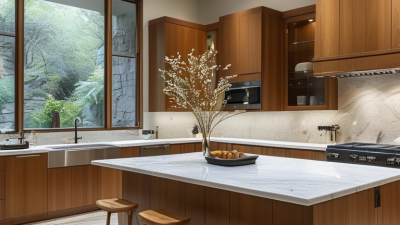
Engineered Quartz: Types, Features, and Common Uses

2026 Top Quartz Material Types for Global Buyers

Engineered Quartz: Types, Features, and Common Uses

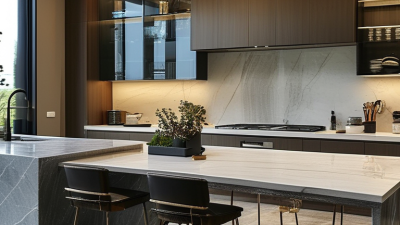
Engineered quartz typically combines crushed quartz with resin and pigments. The exact composition varies by product. Solid-color slabs offer a consistent look, while veined designs mimic natural stone. Granular and terrazzo-style patterns can soften the appearance of busy kitchens. Small samples help, but view a full slab when possible; patterns may shift noticeably across a large counter.

The surface is generally nonporous, so routine cleaning usually needs only mild soap and a soft cloth. It suits kitchen countertops, bathroom vanities, backsplashes, and reception desks. It is not heatproof, though. A hot pan can damage the resin, and some products may discolor under prolonged direct sunlight. No surface is perfect; seams and edge details also depend on the fabricator’s work.

Tips: Ask about composition, care instructions, and indoor or outdoor suitability before buying. Check samples in your room’s actual lighting. Use trivets for hot cookware, even when the slab feels sturdy.

Natural Quartz: Varieties, Grades, and Applications

Natural quartz occurs in several recognizable varieties. Clear quartz is prized for transparency, while milky quartz contains fine inclusions that soften its appearance. Amethyst ranges from pale lavender to deep violet; citrine is typically yellow to golden brown. Smoky quartz offers gray or brown tones. These differences affect both appearance and suitable use. Color can fool the eye, so inspect samples in daylight.

Grades often reflect clarity, color consistency, crystal size, and visible fractures. Grading terms are not perfectly universal, which buyers can easily overlook. Ask suppliers for clear photos, dimensions, and information about treatments or repairs. Fine, clean crystals may suit jewelry or decorative objects. Quartz with more inclusions can still work well in carvings or interior accents. Industrial uses require specifications suited to the application, not appearance alone.

Tips: Check a sample under natural and indoor light. Look closely at edges for chips or fractures. Confirm that the stated grade matches your intended use; a beautiful stone is not always the most practical choice.

2026 Top Quartz Material Types for Global Buyers — Natural Quartz: Varieties, Grades, and Applications

Natural quartz is crystalline silica (SiO₂); pure quartz has a Mohs hardness of 7 and a specific gravity of about 2.65. Commercial grade names and limits vary by producer and end use, so confirm specifications through representative sampling and laboratory testing. Quartzite is included as a natural quartz-rich rock, not as a quartz crystal variety.

Material type Natural characteristics Common buyer grade checks Typical applications Sourcing and specification notes
Rock crystal (clear quartz) Transparent to translucent, usually colorless crystalline quartz. Clarity and inclusions vary naturally. For optical or decorative use: transparency, color, fractures, inclusions, dimensions, and consistency. For industrial feedstock: chemical purity and trace-element analysis. Decorative objects, carved items, collector specimens, and selected technical or optical uses where the material meets the required specification. Clear appearance alone does not establish chemical purity or suitability for technical applications; request both visual grading and analytical data where relevant.
Amethyst Purple variety of quartz, with color ranging from pale violet to deep purple. Color distribution and natural zoning can vary. Color hue and saturation, transparency, visible inclusions, fractures, size, and cut or carving suitability. Gemstones, jewelry, ornamental carvings, and decorative mineral specimens. Agree on color descriptions and acceptable natural inclusions before purchase; appearance can differ across pieces and lighting conditions.
Citrine Yellow to orange-brown variety of quartz. Naturally occurring citrine is less common than heat-treated amethyst sold as citrine. Color, transparency, clarity, fractures, dimensions, and disclosure of any known treatment. Jewelry, beads, decorative carvings, and mineral collections. For gemstone purchases, request clear treatment disclosure and use the applicable gem-trade documentation requirements.
Rose quartz Pink to rose-colored quartz, commonly translucent; color intensity and uniformity vary. Color consistency, translucency, fractures, size, shape, and suitability for cutting or carving. Beads, cabochons, jewelry, small carvings, and decorative objects. Natural color can vary within a lot. Define an acceptable color range and inspection method for bulk orders.
Smoky quartz Brown to gray-brown transparent or translucent quartz; the color may be uneven or zoned. Color tone, transparency, inclusions, fractures, dimensions, and finished-piece yield. Jewelry, carved objects, decorative stone, and collector specimens. Ask suppliers to identify whether lots are sold as rough mineral, cut material, or finished products; grading criteria differ by form.
Milky quartz White, opaque to translucent quartz, often with a cloudy appearance caused by microscopic inclusions or fluid inclusions. For decorative stone: whiteness, uniformity, fractures, and block or piece size. For processing: silica content, impurities, and particle-size requirements. Decorative pieces, crushed stone, and—if the chemical and physical specifications are suitable—industrial silica feedstock. Visual whiteness is not a reliable measure of silica purity; obtain chemical analysis for industrial applications.
Vein quartz Massive quartz occurring in veins within other rocks; color and impurity content depend on the deposit. SiO₂ content, iron and other trace impurities, mineral contaminants, moisture, lump size, and consistency between shipments. Crushed industrial feedstock, silica products, and other applications when the material meets process-specific requirements. There is no single universal grade system. Buyers should state required chemistry, sizing, and contaminant limits in the purchase specification.
Natural quartz sand Granular quartz-rich material produced naturally or by crushing and processing quartz-bearing material; grain shape and size vary. Particle-size distribution, SiO₂ content, clay and heavy-mineral content, moisture, grain shape, and any application-specific test results. Glassmaking, foundry use, filtration, construction, and other industrial uses, subject to the required material specification. Mesh or size ranges and acceptance limits are application-dependent. Confirm test methods, tolerance limits, and washed or dried condition.
High-purity quartz feedstock Selected natural quartz raw material processed for demanding applications; “high purity” is a commercial description rather than one universal grade. Detailed chemical analysis, including relevant trace elements; consistency, inclusions, particle or lump size, and performance in the buyer’s process. Specialty glass and other advanced industrial applications where low impurity levels are specifically required. Set impurity limits and analytical methods with the end user. A headline SiO₂ percentage alone may not capture critical trace contaminants.
Quartzite Hard, quartz-rich metamorphic rock. It is a rock composed predominantly of interlocking mineral grains, not an individual quartz crystal variety. Quartz content, mineral composition, color, durability, block size, fractures, and performance under the intended fabrication or processing method. Dimension stone, cladding, paving, crushed aggregate, and other construction uses depending on the deposit and product form. Check petrographic and physical properties for the intended use; properties can vary between deposits and within a quarry.

Comparing Quartz Materials by Performance, Cost, and Care

Engineered quartz and natural quartzite behave differently, despite similar names. Engineered slabs combine crushed quartz with resin and pigments, giving consistent patterns and low-porosity surfaces. Natural quartzite is quarried stone; veining varies, and sealing may be needed. Both resist everyday scratching reasonably well, but neither is indestructible. Heat still wins.

Cost depends on thickness, finish, fabrication, and shipping. Engineered quartz often offers more predictable pricing, while distinctive quartzite slabs can cost more and create extra waste during vein matching. Houzz’s 2024 U.S. Kitchen Trends Study reported that 42% of renovating homeowners chose quartz. That figure reflects U.S. homeowner choices, not durability or global price. Buyers should compare local, installed quotes—not slab prices alone—and inspect samples under their actual lighting.

Tips: Ask suppliers for the exact material type, care sheet, and stain or heat limitations. Wipe spills promptly with mild soap and water; avoid assuming every cleaner is safe. Check a full slab, not only a small sample. A small sample can mislead. Even experienced buyers sometimes focus too much on appearance and too little on edge details, sink cutouts, and replacement availability.

Matching Quartz Types to Global Project Requirements

Quartz selection should begin with the project, not a color sample. Engineered quartz combines quartz minerals with resin and pigments, offering consistent patterns and a broad color range. It suits indoor counters, reception desks, and repeat installations where uniformity matters. However, resin content can make some products less suitable for sustained heat or strong outdoor sunlight. Check the manufacturer’s technical data for the exact product.

Tips: Ask for a current sample and technical sheet. Confirm slab dimensions, thickness, finish, and edge options before approving shop drawings. A small sample may not show the full pattern.

For projects across regions, compare supply reliability, transport routes, and local fabrication skills. Large slabs can reduce visible seams, but they may raise handling and shipping costs. Recycled-content options may support project goals, though availability and appearance vary by market. Natural quartzite is different from engineered quartz; verify the material name and care requirements rather than relying on sales shorthand. This detail is easy to miss. I would also question any specification based only on hardness: seams, support, cleaning products, and installer experience affect long-term results. No single quartz type fits every climate or schedule, and changing the choice late can create avoidable delays.

2026 Top Quartz Material Types for Global Buyers

Typical Mohs hardness of natural quartz materials

Quartz varieties such as clear quartz, amethyst, rose quartz, and smoky quartz have a Mohs hardness of about 7. Quartzite is typically around 6.5–7. Hardness is only one selection factor: for countertops and other project uses, check the specific slab’s porosity, finish, fabrication requirements, and supplier test data.