
Choosing the right Quartz Laminate Sheets can change a project’s appearance, durability, and long-term maintenance costs. Global buyers need more than attractive veining. They must examine surface thickness, core composition, edge quality, moisture resistance, fire performance, and installation requirements.
Material specialist Dr. Andrew Dent has emphasized, “A material’s value depends on how well it performs in its intended context.” This principle matters when comparing imported sheets from different manufacturers. A glossy white surface may suit a hotel reception desk, while a textured stone finish may work better in a busy kitchen. Small details matter.
This guide reviews seven Quartz Laminate Sheets suited to international purchasing needs. Each option is considered through practical criteria, including visual consistency, scratch resistance, cleaning demands, available sizes, and packaging protection. Shipping distance also deserves attention. Poorly protected corners can arrive chipped, even when the sheet itself meets strong technical standards.
Looks are not enough.
Some buyers may focus too heavily on price. That can be a costly mistake. Lower-priced sheets may require more trimming, replacement, or specialized installation. Others may assume every quartz-effect laminate delivers the same performance. It does not.
The recommendations below are designed for distributors, contractors, designers, and commercial buyers. They encourage careful comparison rather than quick selection. Product data should still be verified with each supplier. Regional standards, indoor air requirements, and warranty terms can differ. No ranking is perfect, and real-world performance depends on installation quality, usage, and maintenance.
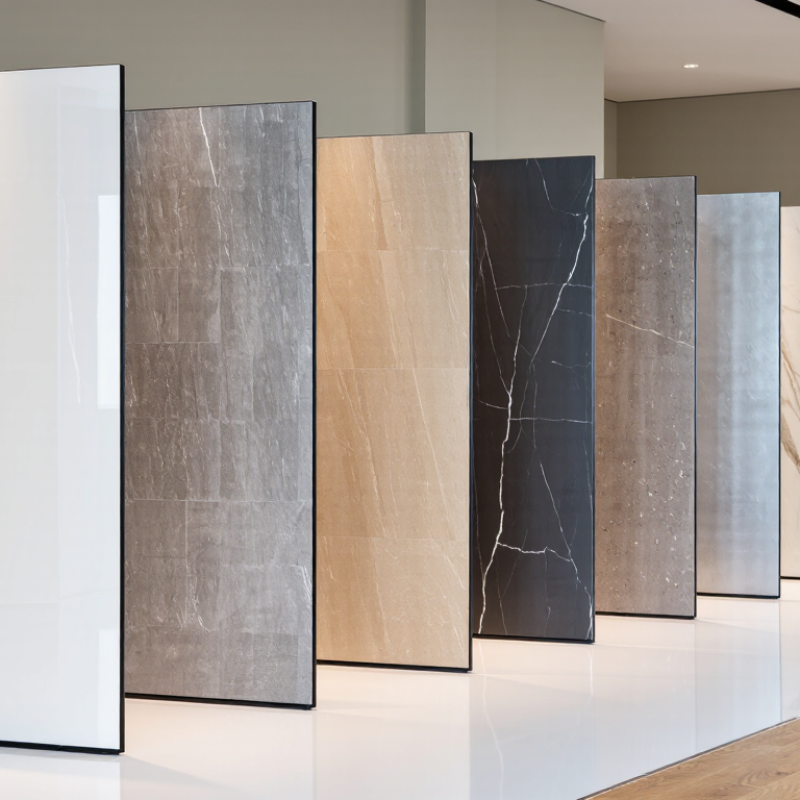
Quartz laminate sheets are engineered decorative panels designed to imitate the color and movement of natural quartz. They usually combine a printed surface layer, protective coating, and stable backing material. Unlike solid quartz, they do not contain a thick mineral slab throughout. This distinction matters when buyers compare strength, weight, and installation methods.
Global buyers often choose these sheets because they reduce material weight, shipping costs, and on-site cutting time. A contractor can use them for cabinet fronts, wall panels, counters, and retail displays. Their consistent patterns also simplify large projects across several locations. Many surfaces resist everyday stains and clean easily with mild soap. Still, performance depends on the core, edge treatment, adhesive, and installation quality.
I have seen purchasing teams focus too much on appearance. That can be a costly mistake. Sample boards should be checked under daylight, warm lighting, and different viewing angles. Buyers should also request technical data, moisture resistance details, fire classifications, and test reports relevant to the destination market. Some sheets look convincingly stone-like but may scratch under heavy commercial use. They may also require careful sealing around sinks and exposed edges. A reliable supplier should explain these limits clearly, not promise that one panel suits every climate or application. The best choice balances appearance, handling, compliance, and expected service conditions.

For global buyers, the seven best quartz laminate sheets should not be ranked by appearance alone. Quality begins with the core, overlay, and bonding system. Ask for thickness tolerance, density, water absorption, and batch consistency. ISO 4586-2 provides relevant laminate tests, including wear, impact, and stain resistance. Request complete test reports, not marketing claims. The Freedonia Group’s 2024 countertop analysis identifies remodeling and new construction as major demand drivers. Consistent quality matters more than a dramatic sample.
Design comparison needs daylight and close inspection. Check veining alignment, edge color, gloss level, and print resolution. A 600-millimeter sample can hide pattern repetition. View two sheets side by side. Confirm that trimming does not damage the decorative layer. For export projects, request digital color references and a physical control sample. This reduces disputes between factories, containers, and installation teams. Color judgment remains partly subjective. I have seen “warm white” appear gray under cool LED lighting.
Performance should match the room. Use ASTM D4060 abrasion data for high-traffic surfaces and ASTM D3363 hardness data when scratch resistance matters. Check heat guidance, impact results, and chemical-stain testing. Do not assume quartz content guarantees durability. Installation quality matters too. Poor substrate support can cause cracking or visible joints. Grand View Research reported the engineered stone market exceeded 25 billion US dollars in 2023, showing demand, not uniform quality. Compare warranty exclusions, inspection procedures, packing protection, and replacement lead times before selecting one sheet.
7 Best Quartz Laminate Sheets for Global Buyers
The seven best quartz laminate sheet types suit different international project demands. Solid white sheets create bright, clean counters in clinics, kitchens, and retail interiors. Warm beige patterns add comfort to hospitality spaces without overwhelming small rooms. Concrete gray designs provide an urban appearance for offices and commercial furniture. Calacatta-inspired veining offers a premium stone effect, but alignment can increase installation waste. Black quartz patterns create strong contrast, especially around pale cabinetry and metal fixtures. Terrazzo-style sheets introduce colored chips and hide minor marks effectively. Matte-finish quartz designs reduce glare, while high-gloss surfaces reflect more light and clean quickly.
Details matter. In my project reviews, edge visibility often affects the final impression more than the printed pattern. Buyers should request technical sheets, sample panels, and production tolerances before approving large quantities. Moisture resistance, scratch performance, cleaning requirements, and fire documentation must match the destination market. Test first. A sample may look balanced indoors but appear too cold under warehouse lighting.
International buyers should also confirm sheet dimensions, core construction, packaging strength, and replacement procedures. Long-distance shipping can expose corners to impact, even with careful handling. Vein direction needs clear drawings, especially for doors, countertops, and wall panels. Some suppliers provide reliable samples but inconsistent batch tones; this remains an overlooked risk. A practical specification should name the finish, thickness, color range, acceptable variation, and inspection method. The best choice is not always the most luxurious one. It is the type that performs predictably in its actual climate, use, and installation system.
| Quartz Laminate Sheet Type | Visual Character | Typical Thickness | Common Sheet Sizes | Surface Performance | Best-Fit Applications | International Project Advantages | Key Buying Check |
|---|---|---|---|---|---|---|---|
| 1. Solid-White Quartz Look | Uniform white or softly speckled appearance with a clean, minimal aesthetic. | 0.7–1.2 mm decorative laminate; 6–12 mm compact laminate panels are also common. | Approximately 1,220 × 2,440 mm; larger sizes may reach about 1,300 × 3,050 mm. | Easy to clean, resistant to ordinary household stains, and suitable for high-use interior surfaces when correctly specified. | Kitchen fronts, bathroom vanities, reception counters, wall cladding, and modular furniture. | Neutral color supports residential, hospitality, healthcare, and commercial design schemes. | Check color consistency, edge finishing, and visible joint behavior under strong lighting. |
| 2. Calacatta-Style Veined Quartz Look | White base with bold or subtle gray veining inspired by natural marble and engineered quartz. | 0.8–1.2 mm decorative laminate; 8–12 mm compact panels for more rigid installations. | Typically 1,220 × 2,440 mm; project orders may use panels near 1,300 × 3,050 mm. | Low-porosity laminate surface with good scratch and abrasion resistance for interior use. | Feature walls, cabinet doors, island surrounds, vanity panels, and retail interiors. | High visual impact without the weight, quarrying, or installation requirements of natural stone. | Request a full-size sample to confirm vein scale, direction, and repeat pattern. |
| 3. Fine-Speckled Quartz Look | Small, evenly distributed mineral-like particles on a white, beige, gray, or charcoal background. | 0.7–1.0 mm decorative laminate; 6–10 mm compact laminate for impact-prone areas. | Commonly 1,220 × 2,440 mm, with cut-to-size fabrication available in many markets. | Speckled pattern helps disguise minor marks, fingerprints, and light surface dust. | Worktops, laboratory casework, school furniture, service counters, and office panelling. | Practical appearance and relatively consistent pattern matching across multiple shipments. | Verify chemical-resistance data when the surface will contact disinfectants or laboratory agents. |
| 4. Concrete-Quartz Look | Matte gray or warm greige background with subtle mineral movement and concrete-inspired variation. | 0.8–1.2 mm decorative laminate; 8–12 mm compact laminate for furniture and partitions. | Usually about 1,220 × 2,440 mm; oversized formats depend on the production line. | Matte finishes reduce glare and provide practical abrasion performance for commercial interiors. | Office desks, hospitality counters, partitions, kitchen cabinetry, and urban-style interiors. | Coordinates easily with wood, metal, glass, and neutral architectural materials. | Confirm whether the finish is textured, because textured surfaces may require additional cleaning care. |
| 5. Terrazzo-Quartz Look | Composite appearance with chips or particles in varied sizes over a light or dark base. | 0.8–1.2 mm decorative laminate; 6–12 mm compact laminate for durable panel assemblies. | Typical formats are near 1,220 × 2,440 mm; pattern continuity should be reviewed before cutting. | Busy visual pattern can conceal minor scuffs; performance depends on the laminate grade and overlay. | Cafés, retail counters, public interiors, worktops, wall panels, and furniture surfaces. | Distinctive decorative effect with lower handling weight than solid stone slabs. | Check chip distribution and batch-to-batch variation when several panels must appear continuous. |
| 6. Dark Quartz with Metallic or Mineral Flecks | Black, graphite, or deep gray field with fine metallic, mineral, or reflective accents. | 0.8–1.2 mm decorative laminate; 8–12 mm compact laminate for vertical or furniture panels. | Commonly 1,220 × 2,440 mm, with project-specific panel sizes subject to availability. | Creates a premium appearance; darker colors may show fingerprints and fine dust more readily. | Hotel bars, retail displays, feature cabinetry, reception desks, and entertainment furniture. | Strong contrast works well with warm timber, brushed metal, and controlled interior lighting. | Review gloss level, fingerprint visibility, and color uniformity under the project lighting plan. |
| 7. Exterior-Grade UV-Resistant Quartz Look | Stone-inspired white, gray, beige, or dark patterns engineered for covered or exterior applications. | Typically 6–12 mm compact exterior laminate; thinner decorative grades may be interior-only. | Often produced around 1,220 × 2,440 mm; larger formats depend on the certified system. | Designed for improved moisture, impact, and ultraviolet exposure performance when the complete system is rated for outdoor use. | Balcony furniture, covered outdoor kitchens, façades, signage, exterior cabinetry, and transport interiors. | Useful for humid or high-sunlight markets when the panel, edge, fasteners, and installation method are compatible. | Require documented UV, moisture, fire, and temperature performance for the intended climate. |
Selecting quartz laminate sheets starts with the application, not the pattern. Quartz appearance does not mean the sheet contains natural quartz. Many products are decorative high-pressure laminates, evaluated under EN 438 or NEMA LD 3 standards. For kitchen fronts, wardrobes, and office partitions, check abrasion, impact, stain, and cleaning resistance. For countertops, specify a grade designed for horizontal use. Vertical-grade laminate may fail under heavy chopping or standing water.
Climate changes the selection. The World Meteorological Organization reported that 2024 was about 1.55°C above the pre-industrial average. Hotter interiors and stronger sunlight can accelerate fading, especially near windows. Choose tested UV resistance, and request results based on ISO 4892-3 or an equivalent method. In humid coastal areas, sealed edges and moisture-resistant substrates matter more than a glossy finish. Bathrooms need carefully sealed joints because laminate is water-resistant, not waterproof. In cold regions, allow proper expansion gaps and avoid unheated spaces unless the manufacturer confirms freeze-thaw performance.
I once treated a light quartz pattern as automatically cooler and safer near a window. That assumption was weak. Dark surfaces can also show fewer stains but absorb more heat. Request technical sheets, installation tolerances, and cleaning limits before ordering globally. Small details matter: a 0.5-millimeter edge gap, poor adhesive choice, or direct steam exposure can shorten service life. Check local humidity, sunlight, and temperature records from the World Bank Climate Change Knowledge Portal before final specification.
The comparative index uses a 0–100 planning scale based on moisture exposure, impact resistance, abrasion demand, fabrication requirements, and climate stability. Higher scores indicate applications where a durable quartz laminate sheet specification is generally more important. In humid, coastal, or high-temperature environments, buyers should confirm water absorption, thermal movement, UV resistance, edge sealing, and the manufacturer’s installation temperature limits before selection.
Global buyers should judge quartz laminate sheets by documented performance, not showroom shine. Grand View Research valued the global engineered quartz countertop market at about US$11.5 billion in 2023. Its forecast also suggests continued growth through 2030. That growth increases supplier choices, but it does not guarantee consistent quality.
Check seven details before ordering:
Request recent laboratory reports, not only a supplier’s brochure. Confirm the test method and sample thickness. A pale sheet can reveal shade variation after cutting. A glossy surface can also show scratches quickly. I would request samples from different production batches.
Do not overlook safety and logistics.
Ask for the material’s crystalline silica content, safety data sheet, and cutting guidance. International occupational-health agencies identify respirable crystalline silica as a serious workplace hazard during dry cutting. Packaging should protect corners, faces, and full-size sheets during sea transport. Check pallet dimensions, moisture barriers, container loading photos, and damage-claim procedures. Freedonia’s World Countertops research links demand to remodeling and new construction, but market demand is not proof of product reliability. This is where buyers often misjudge risk. A lower unit price may hide higher breakage, rejected colors, or difficult local installation. Confirm fire, emissions, and building requirements in the destination country before placing a large order.