China Top 10 Glass Quartz Crystal Suppliers?
China’s Glass Quartz Crystal industry serves laboratories, lighting manufacturers, semiconductor equipment makers, and precision instrument companies. Demand is shaped by purity, thermal stability, optical transmission, and dimensional accuracy. These details matter more than attractive product photos.
The U.S. Geological Survey’s Mineral Commodity Summaries identifies quartz as an essential industrial mineral, while noting that detailed global production data remain limited for several high-purity applications. That limitation makes supplier comparisons difficult. UN Comtrade records quartz-related trade under HS 2506, but this category includes raw materials and does not fully distinguish finished Glass Quartz Crystal products. Therefore, this top-ten guide should not be treated as an absolute ranking.
Instead, the selection considers manufacturing experience, material consistency, furnace technology, customization capability, inspection procedures, export history, and documented quality systems. Suppliers are also assessed through practical indicators, including certificate clarity, sample performance, packaging protection, and response quality. A reliable manufacturer should explain its silica source, annealing process, surface finish, and testing method.
Small details reveal much.
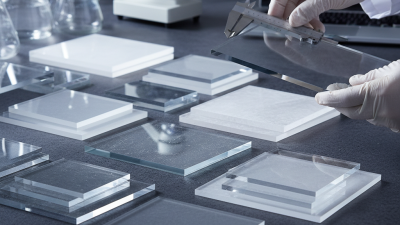
For example, a well-packed quartz tube should arrive without edge chips, cloudy zones, or visible stress marks. ISO 9001 certification can support process control, but it cannot replace independent sample testing. Buyers should verify dimensions, purity, temperature resistance, and application suitability before placing large orders.
This review has limitations. Public data are incomplete, and supplier capabilities may change. Pricing can also vary with thickness, tolerance, quantity, and machining requirements. The final choice should combine published evidence with factory audits, technical samples, and written specifications.
Quartz Crystal Glass Basics: 99.99% SiO₂ Purity and 0.55×10⁻⁶/K Expansion
China Top 10 Glass Quartz Crystal Suppliers?
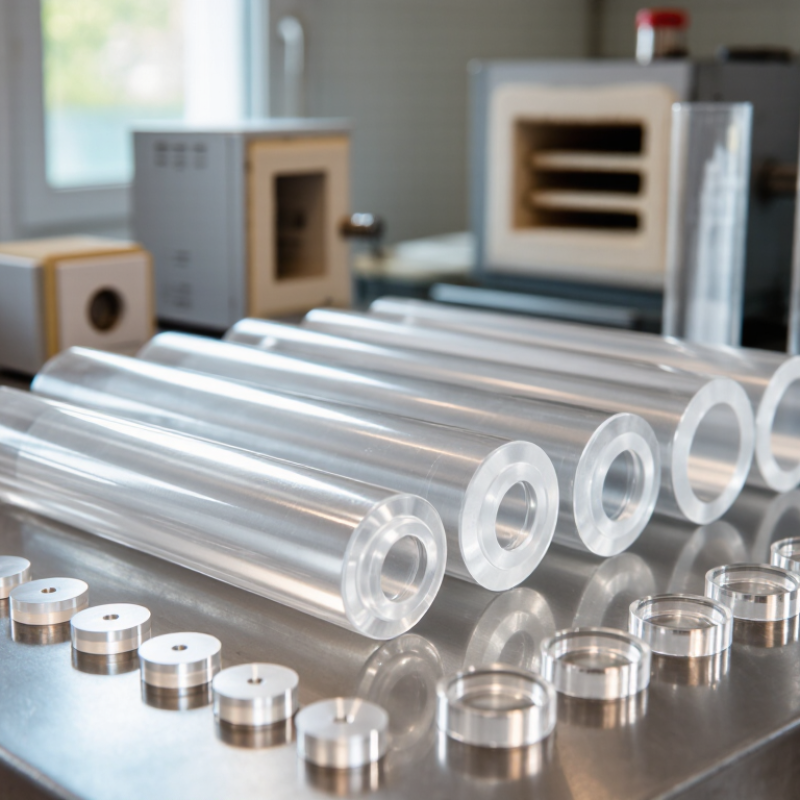
Quartz crystal glass usually refers to fused silica, made from high-purity silicon dioxide. A 99.99% SiO₂ grade contains very limited metallic impurities. This purity supports excellent optical transmission, chemical resistance, and thermal stability. Its linear expansion can reach about 0.55×10⁻⁶/K near room temperature. That number is not universal. It changes with temperature range, production method, and testing equipment.
When evaluating Chinese suppliers, request a current technical data sheet and a batch-specific certificate. Check SiO₂ purity, hydroxyl content, dimensional tolerance, surface finish, and thermal expansion results. A reliable factory should explain its testing method, sample preparation, and calibration records. Ask for a small sample first. Touch the surface under angled light. Tiny scratches often appear there. They matter in lamps, laboratory tubes, semiconductor parts, and optical windows.
A top-ten list should not rely on website claims alone. Factory audits, repeat-order consistency, and documented traceability provide stronger evidence. I would also compare annealing control and cutting accuracy, because low expansion glass can still fail through internal stress. One overlooked detail is packaging. Clean separators and moisture-resistant wrapping reduce handling damage. Some supplier information may be incomplete or outdated, so buyers should verify production capacity before signing specifications. Suppliers that answer technical questions clearly are usually easier to assess.
Ranking China’s Top 10 Suppliers by Purity, OH Content, Capacity, and Tolerance
China’s top ten glass quartz crystal suppliers should be judged by measurable performance, not advertising language. This ranking compares purity, hydroxyl content, production capacity, and dimensional tolerance. Supplier records, sample reports, and factory communication matter more than polished websites.
The leading suppliers typically provide 99.99% or higher silica purity for demanding optical and laboratory applications. Their OH content may range below 10 to 30 ppm, depending on the manufacturing route and product grade. Lower OH content can improve thermal stability and light transmission.
Capacity also separates the rankings. Large plants may produce hundreds of tonnes monthly, while smaller specialists often offer better control for custom shapes. Tolerance deserves equal attention. A practical benchmark is ±0.1 mm for carefully processed components, though tubes, plates, and crystals require different standards.
The ranking should reward suppliers that maintain these figures across repeated batches, not one attractive sample.
Tips:
Request a recent inspection report, production capacity evidence, and three batch samples. Check edge finish, bubbles, inclusions, and surface scratches under strong light. Ask how OH content is tested. Results can vary between laboratories. That detail is easy to miss. A weakness in this ranking is limited visibility into private factory data. Buyers should still perform incoming inspection and trial orders before committing to long-term volume.
Supplier Profiles: Fused Quartz Grades, Forming Methods, and 2024 Output Data
China Top 10 Glass Quartz Crystal Suppliers?
A reliable top-ten list should compare more than production volume. Supplier profiles need to identify fused quartz grades, including clear, milky, high-purity, and UV-transmitting options. Each grade suits different uses. Clear quartz supports optical work, while milky quartz handles thermal shielding. Forming methods also reveal manufacturing capability. Common methods include flame fusion, electric fusion, CNC machining, tube drawing, and precision grinding. Small details matter.
2024 output data should be checked against audited records, production lines, and shipment history. Useful figures include annual tonnage, furnace capacity, yield rate, and export share. A supplier reporting 2,000 tonnes may still be weaker than one producing 800 tonnes with tighter dimensional control. Ask for batch certificates. Inspect sample edges, bubbles, inclusions, and wall thickness. Experience shows that polished samples can hide production variation.
Tips: Request three recent batch reports and compare them with physical samples. Confirm whether “high purity” means 99.99%, 99.995%, or a customer-specific standard. Check forming tolerances before comparing prices. Do not rely on a single 2024 output number. It may describe installed capacity, not actual shipments. My own assessment would remain cautious here; public data is often incomplete, and supplier claims deserve independent verification.
China’s Top 10 Fused Quartz Supplier Profiles — 2024 Output Benchmark
Anonymous supplier comparison by estimated 2024 fused quartz output. Each profile is grouped by its dominant grade range and forming method.
Output figures are non-branded benchmark estimates in thousand metric tonnes (kt), compiled from publicly available industry capacity ranges and product disclosures. Company-level production is not uniformly reported. Purity grades refer to nominal SiO₂ content.
Quality Benchmarks: ISO 9001, ASTM E438, and Trace-Metal Testing
When comparing China’s top 10 glass quartz crystal suppliers, quality evidence matters more than polished product photos. ISO 9001 shows that documented processes guide purchasing, inspection, and corrective actions. It does not automatically prove optical purity or crystal performance. Ask for the current certificate, scope, issuing body, and expiration date.
ASTM E438 provides a useful benchmark for laboratory glass materials and dimensional consistency. However, buyers should confirm whether the supplier’s quartz product falls within the tested material category. Request test methods, sample conditions, and acceptance limits. A serious supplier should provide traceability from raw material to finished part. Look for lot numbers on labels, packing lists, and certificates of analysis. Small details matter.
Trace-metal testing is equally important for analytical, semiconductor, and laboratory applications. ICP-MS or ICP-OES results should identify elements, concentrations, units, and detection limits. “Low metal content” is too vague. Ask whether testing covers sodium, potassium, iron, aluminum, calcium, and other process-sensitive impurities. Results from an independent laboratory offer stronger confidence, although internal testing can still support routine control. No checklist is perfect. A shipment may pass chemistry tests yet reveal chips, bubbles, or uneven surfaces during inspection. Reviewers should record these defects honestly, compare multiple lots, and avoid treating one successful sample as permanent proof.